History 5 Lesson 75

Condensed Milk 

Gail Borden Jr. was born in New York in 1801. He published a newspaper during the Texas Revolution. His wife died of yellow fever in 1844. He witnessed children dying because of bad milk. Borden invented condensed milk in 1856. Condensed and sweetened cow’s milk. Microorganisms cause milk to spoil. Heating the milk prevents spoilage. Sugar is added as a preservative. Useful in recipes and stores for a long time. Borden’s milk was known for its high quality. High demand from the word after the war ended. Production ramped up from competitors leading to a price crash. 

Sleeping Car 

Goerge Pullman was born in New York in 1831. He helped father move houses along the eire canal. He put his engineering skills to use in Chicago. Raised foundations out of the swamp. He invented the sleeping car in 1865. Provides living space on long train rides. Beds folded up during the daytime. On-board porters served customers. It was basically a hotel on wheels. It was a comfortable way to pass the time. Pullman took advantage of the one-time opportunity. 

Toilet Paper 

China invented lots of things early on. Including toilet paper. The Romans used a sponge on a stick, the American colonists used corn cobs. Joseph Gayetty invented toilet paper in 1857. Toilet paper is made of a combination of hard and soft wood fibers factories convert raw pulp into toilet paper. Gayetty marketed his paper beginning in 1857. Targeted customers with itchy pain. 

Washing Machine 

Washing clothes was time consuming. Women had to haul lots of water. Inventors began focusing on the process in the 18th century. Washboard made it easier to hand-wash clothes. Hamilton Smith invented the washing machine in 1858. Washing machines clean soiled clothes. Water and soap loosen the dirt. Agitators scrub the clothes. The washing machine saved a lot of time. Smith’s machine didn’t use electricity but it was easier than a washboard. An English machine was demonstrated at the World’s fair in 1862. Electricity applied in 1904. A million units sold annually by 1928.


History 5 Lesson 70

Safety Elevator

Elisha Otis was born in Vermont in 1811. He moved his family to a river in town. He built a grist mill. Otis owned his own business but it failed. Then he invented the safety elevator in 1852. Elevators transport people and supplies up and down. There was a cab lifted by steel cable and balanced with countwightes. What happens if the cable snaps? The elevator used a backup ratchet system. Farliest elevators required manual lifting. Despite the apartment benefits, it was slow to sell initially. Otis rented space at the World’s Fair in 1853. He put on a dramatic demonstration. And the sales became steady. 

Syringe

Alexander Wood was born in Scotland in 1817. Wood was trained in classical curriculum. He attained a medical degree at Edinburgh. He invented the syringe in 1853, he was inspired by bee stingers. Doctors use hypodermic syringes. It’s basically a “reciprocating pump”.  The syringe can precisely control the amount injected. It’s also used outside the medical industry. Even in industrial settings. It was popularized in France by a doctor. The one-Handed syringe was invented in 1899, then the glass syringe was invented in 1946, and finally disposable syringe in 1949. 

The Bessemer Process 

Henry Bessemer was born in England in 1813. He was a  prolific inventor like his dad. He grew interested in weapons due to the  Crimlam War. Napoleon III wanted more steel for better weapons. Bessemer steel-making process in 1855. The Bessemer process converts pig iron into steel. It forces hot air through molten iron to remove impurity. Steel contains 2% carbon. Made large-scale steel production feasible. This recused it’s price and made it affordable in large jobs. Bessemer licensed his patent to five English ironmakers. They couldn’t understand his process, so he opened his own factory. His process then spread to America in 1862. 

Egg- Beater

Ancient Egyptians invented a baking oven. It grew from family labor to profession in Rome. Guilds arose and fasted through the Middle Ages. The mixer was invented in 1856 by Ralph collier. Egg-beater is a kitchen mixer. It automates the repetitive nature of mixing. It’s a handheld device that makes mixing ingredients much easier.Electric mixers grew up out of hand mixers. Other inventors saw collier;s patent and pursued their own. An 1859 model was sold to a major company. Another innovative mixer followed the same pattern in 1870. Herbert John invented the KitchenAid mixer in 1918.

History 5 Lesson 65

Jackhammer

Mining was important but hazardous. Early jackhammers were inspired by steam engines, developed by 1806. Jonathan couch invented the modern jackhammer in 1848. Jackhammers are “hammer drills”. The bit is pushed up and down pressurized air. The modern jackhammer can run on electricity. Steam engines couldn’t be installed inside mines. They produce hazardous gases. Couch’s assistant, Foul innovate the jackhammer to use compressed air. It could also be used to ventilate the mines. Demonstrations were performed to investors. 

Pin-Tumbler Lock

Linus Yale Sr. was born in Connecticut in 1797. He opened a lock shop in his 46’s. Yale invented pin-tumbler lock in 1843. Lock contains pins in a cylindrical drum. The key lines up pins to rotate the cylinder. Each pin has two parts. These locks are harder to pick than the old locks. They are easy to re-key. Linus Yale Jr. continued his father’s work. Became a mechanical engineer. His locks received widespread acclaim. He demonstrated them at the World’s Fair. Advertised 9 important benefits Yale exposed vulnerabilities in competitor’s locks.

Safety Pin

Walter Hunt was born in New York in 1796. Hunt invented a version of the sewing machine in 1832. He had experience with needles and the sewing industry. He invented the safety pin in 1849. Safety pins are simple folding needles. Pins have sharp heads that can stick you. The safety pin guards the head within a clasp. They fasten fabric and other materials together. Hunt made 27 times his debt level when he sold the patent. They were simple to manufacture. They were advertised to nurses and housewives for diapers and clothes. They were acquired by a large chemical company.

Gyroscopes

Leon Foucult was born in Paris in 1819. He became interested in Physics. He helped discover the speed of light. He did an experiment to prove rotation of earth in 1851. He invented the gyroscope in 1852. Gyroscope: spinning disc set inside gimbals. It seemed to defy laws of physics (they don’t). The gimbals allow rotation. They resist forces that try to turn them. Gyroscopes create stability. Foucult used gyroscopes to prove earth’s rotation. Electric motors applied in the 1860s. Gyroscopic compass built in 1904.          

History 5 Lesson 60

Rotary Printing Press

Riched Hoe was born in New York in 1812. He became  president of father’s press manufacturing company when he was 21. Invented the rotary press in 1843.The rotary press uses rotating drums. This allows a “Never-ending” stream of paper to be printed. The type is on the cylinder face. Hundreds of feet of paper can be loaded into the machine. In the 1820s “Newspapers” were published by political parties. Abell founded the Baltimore Sun in 1837. Abell was quick to adopt new technologies. The sun and other New York papers increased their circulation because of the printer.  The middle class began relying on newspapers for daily news. 

Kerosene 

Abraham Gesmer was born in Canada in 1787, moved to England to become a doctor. Became interested in geology after meeting Charles Lyell. He practiced medicine and geology back home in Canada. He invented kerosene in 1846. Kerosene is a fuel and generalized trademark. Derived from petroleum. It was used for heaters, lamps, and jet fuel. Gerner formed a company in 1850 to sell lamps and oil. Expanded to the Northeastern US in 1854. An American inventor was competing with an inferior product. Meantulile Samuel Kier founded American petroleum industry. Supplies circumvented eatens by making kerosene from petroleum.

Antiseptics

Ignaz Semmeluies was in 1818 in Budapest. He went into abstetics. Semmeluies worked for Vienna General Hospital. Decided to solve the problem of the two clinies, he observed and recorded. Breakthrough after friend’s death. Then he had the Eureka moment. He invented antiseptic use in 1847. Antiseptics kills germs. Germs cause infection, and antiseptics lowers death rates. Semmeluies reduced mortality from 18% to 2% in 1 month. His students spread the word, the establishment rejected. Repeated success in Budapest in 1852. He wrote letters to doctors across Europe. Pasteur’s germ theory reduced resistance later. Critice innored data. Conflicting theories of knowledge. 

 Gas Mask

Ancient Cultures used masks. A prussian intro created a mask for mining in 1799. Lewis P. Haslett invented the prototype of the modern version in 1847. It was probably intended to be used by Kentucky coal miners. Gas masks protect lungs from polluted air. Forces air through a filter. Particles and chemical vapors. Separate oxygen tanks may be required. Enable work in hazardous environments. Germans launched chemical weapons in World War 1.  A canadaion doctor invented a gas mask the troops. An american inventor created a mask too for American troops. The modern gas mask was invented in 1944. 

History 5 Lesson 55

Ether

Crawford Long was born in Gergi in 1815. He spent many years learning to become a doctor. Long moved home to Georgia to practice. Long noted the properties and effects of weather on people. Used either as an anesthetic in 1842. Diethyl ether general anesthetic for surgery. He breathed in vapor from a rag. Signaled the era of pain-free surgery. Side effect:made patients sick. Multiple liam over the invention of anesthesia. Morton, Jakson, and Long all claimed credit. All three fought bitterly which ended in humiliation and tragedy. Morton and wells probably get the idea from Long. History acknowledges Long as the inventor.

Fax Machine

Alexander Bain invented the fax machine, he was born in Scotland in 1811. Apprenticed to a clockmaker. Moved to Lonton. He learned about electromagnetic field theory. Combined clockmaking and electricity to invent a coping machine. Fax machines scan and reproduce documents. Data transmitted as audio signals. Transmits a page every five seconds over telephone lines. Reproduces documents of text or images in seconds. Bain continued to improve his fax machine. Bakewell made a better version that replaced Bain’s pendulums. An Italian developed a machine that became commercially successful around 1861. Competition emerged by 1900, and Elisha Grey created an innovative device in the US.

Steam-Powered Iron Passengers Ships

Isambard Brunel was born in England in 1806. He was educated by his father and school. He apprenticed as a clockmaker. Assisted father Marc with Thames Tunnel. Isambard built bridges and the Great Estern Railroad. Brunel wanted to add steam ships. He invented iron steamships in 1843. Large steam ships transport people and cargo long distances, steam power made their schedules predictable. It used peroellers instead of paddle wheels. It faried lots of passengers at times cheaply. Brunel was renowned throughout England. His ships outperformed rivals. Had grand visions that captured the public’s imagination. Steamship demand increased in 1880a due to immigtation to America. 

Ice Cream Maker

Making ice cream was an labor-intensive process. You had to manually spin and scrape. Nancy Johson invented the hand cranked ice cream maker. Johnson  patented it in 1843. Ice cream: Whipping cream sugar, vanilla extract. Salt lowered the melting point of ice. Ice goes in, outer vat ingredients go in the conister. Blade scrapes the ice cream from the wall. Made the process more efficient. Nancy Johnson sold patent rights.Ice cream store appeared and mass-production facilities emerged by the second half of the 1800s.   


History 5 Lesson 50

Electric Clock

Alexander Bain was born in Scotland in 1811, he was an apprentice to a clockmaker. Bain moved to London to sell services. He learned about electromagnetism. He invented the electric clock in 1840. Electricity kept the pendulum moving instead of weight. Electronic oscillators also used to replace pendulums. Synchronous clocks use Go-HZ power frequency. Crystal oscillators can be used to track time. They can be smaller, last longer, and more portable. Bain almost swindled out of his invention. Wheatstom’s attention was thwarted by Bain’s patent application. Parliament awarded Bain “damages”. Inventors after 1840 began developing different kinds of electric clocks. 

Stapler

Samuel Slocum was born in Rhode Island in 1792. Learned carpentry then moved to London to make pins. He invented a machine that manufactured pins. Invented first stapler in 1841. Staples bind multiple sheets of paper together. U-shaped staples are driven through and their ends bend. Staplers used in numerous environments. They can also be used in construction and in medical application. George McGill spent 20 years improving versions of the stapler models in the early in the 1900s. 

Blueprints

John Herchel was born in England in 1792. Published a work on scientific methodology. Escaped to South Africa for a time in 1833. Published drawings of plants. He invented the blueprinting process in 1842. Blueprints are drawings, making it fast and easy to make copies of drawings. Chemically coated paper exposed to eight. Preserved perspectives on copies. Difficult to make changes to blueprints. The cyanotype process was used for drawings copies from  the beginning.  botanists used the technique to form images of plants. Cheaper than hiring drafters to hand copy. Scientists used the process, delinded after the 1940s. 

Grain Elevator 

Joseph Dart was born in Connecticut in 1799. He sold fers to Indian travellers, then moved into grain trading in Buffalo.  He partnered with Robert Dunbar. The two built the first grain elevator in 1844. Grain elevators lift grain up and into a silo. Dart’s was steam powered. About 8 times faster than manual unlading. Quickly unloaded, stored, and dispensed grain. Includes scale for weighing grain. Darts’s elevator built along a river. Word-of-mouth spread, Dumbar built elevators all over the world. Still prominent and important facilities today.      

History 5 Lesson 35

Combine Harvester

Hiram Moore was born in 1801 in New Hampshire. His neighbor, hascal, had  fled the Freemasonry affair. Hascall had a farm, but no workers to reap the harvest. Hascall told Moore about his wife’s dream. Moore developed the combine harvester in 1834, it was a miniature mobile grain factory. A fan and Archimedes screw sifted grain from chaff. Grains were bagged at the top. 30 acres harvested per baile, cost reduction of 80% (From $5 to $1) Moore’s harvester (all-in-one) was really too early, it also had several drawbacks. Received monetare support from Hascall and a US representative. They sent some to California to harvest over 600 acres of wheat (1854) 


Solar Compass

Willam Austin Burt was born in 1792,  he developed interest in nautical navigation. His life’s calling: was to help mankind, He was the inventor of several devices. Burt became a surveyor in the US government. Invented solar compass to solve compass to solve problems of magnetic interference in 1835. The solar compass didn’t rely on earth’s magnetic field. It was a complete instrument with movable parts to determine position. Burt won an award from the Franklin Institute. He made continual improvements,  he demonstrated at world’s fair in London. The US government made it a standard tool for it’s surveyors. 

  Propeller

Franacis Pettit Smith was born in England in 1808. He became a farming apprentice, he was fascinated by boats as a child. Smith grew interested in how boats were powered. He invented the screw propeller in 1835. The screw propeller had advantages over the  paddle wheel. It was lighter and more efficient. It helped ships rock less. Made boats are easier to navigate. Propeller converts rotational motion into “thrust” (linear motion) Another inventor patented a propeller 6 weeks after Smith did. He Began advertising to the Navy. His rival’s model didn’t impress the Navy. Smith convinced Brunell to use the propeller instead of the paddlewheel. 

       Mechanical Computer 

Charles Babbage was born in London in 1791. He became self-taught in math. Books of logarithms and data tables were vital in many fields. They contained errors, and Babbage wanted to fix that. He designed his “Analytical Engine” in 1835. Expanded capabilities beyond computing logarithms. He was programmable using punched cards. He did most actions of modern computers (loops, branches) It even had date memory. It would print tables automatically and accurately. Babbage never built the machine, Ada Lovelace was fascinated by the concept. She became the world’s first programmer. Babbage’s machine never received much publicity during his lifetime.     

History 5 Lesson 30

So before you read the lesson thingy, I’m letting you guys know that there is only pictures on the first invention and the last invention, but that’s only because I couldn’t find good pictures of the other inventions.

Platform Scale 

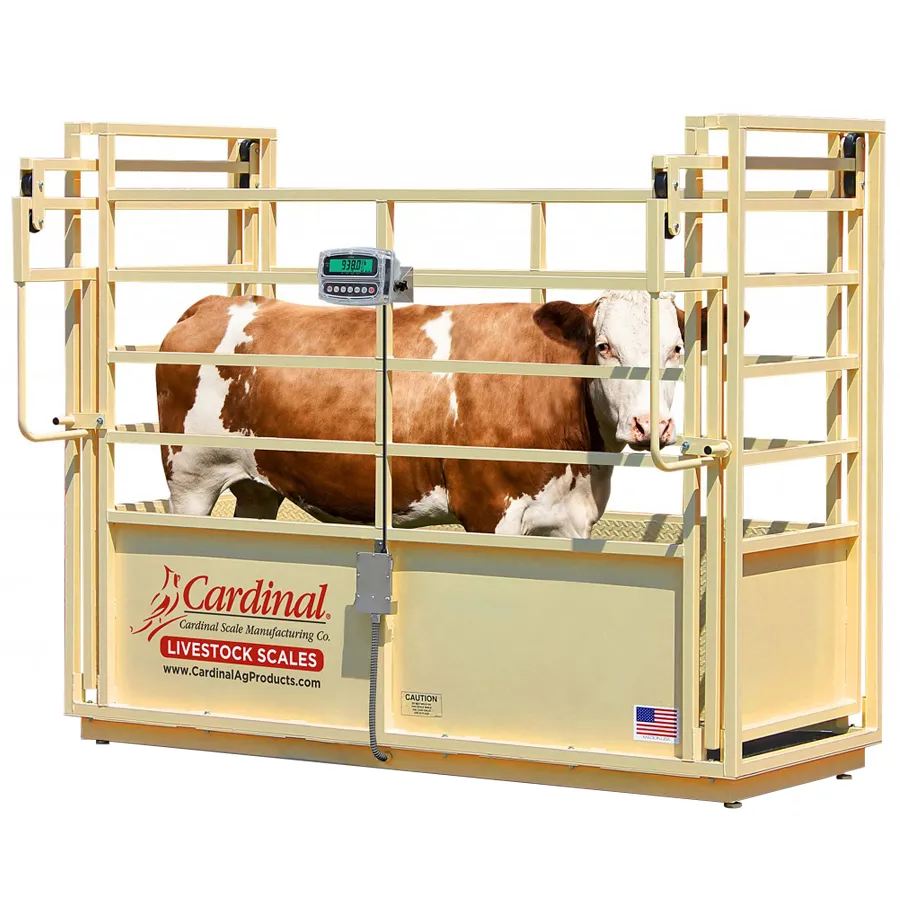
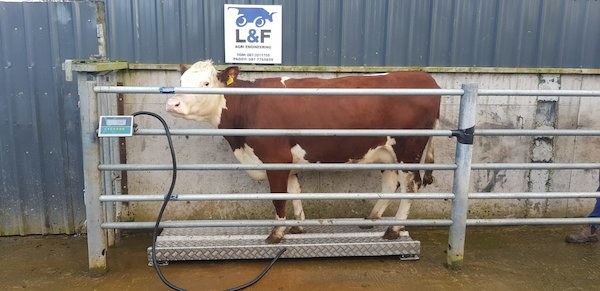
Thaddeus Fairbanks was born in 1796 in Massachusetts. Built an iron foundry in 1823. His brother Erstus came to work for him. Thaddeus solved the problem of too large counterweights. It nuented the platform scale in 1830. Platform scales measure large and heavy objects.For example, there are big enough scales to weigh show steers. They take advantage of the advantage offered by levers. They were functional, there were no cranes required and they were very accurate. Demand for the scale was strong, and industrialization continued stimulating demand. Fairbanks began selling the scales overseas. Sales slowed during the Civil war. By the 1860s, the scales were in numerous industries. 

Here are some pictures of a cattle scale. As you can see there are many different versions of the cattle scale.

Railroad T-Rail

Robert Stevens was born in New Jersey in 1787, he worked with his father to build steamships. Stevens improved various steamship designs and became president of the railroad company in 1830. He invented the t-rail in 1831. The flanged t-rail: upside down “T”. The heavier it is the greater load it can carry. It’s strength comes from the  similarity to the I-beam. Railroad ties are spaced 18 inches apart, til plates fasted the rails to the ties. Sevens rail became an American standard. It was sturdy and easy to install. Charles vignoles introduced the design to Britain. It became known there as “vignoles” rail. 

Multi Loop Magnet 

Joseph Henry was born in New York in 1797. He became interested in science at 16. He also became a state engineer after college. Henry became a science professor in 1826 at age 29. He invented multiple- coil magnets in 1831. Non-insulated wire shorts out when touching each other. Henry could squeeze coils close to each other. N= loop, I=current, L=length. How to make a strong B? Henry built the world’s strongest electromagnet for Yale. Created early-version of motor, Smithsonian Institution founded in 1846. Increase and diffuse knowledge. 

Mechanical Reaper

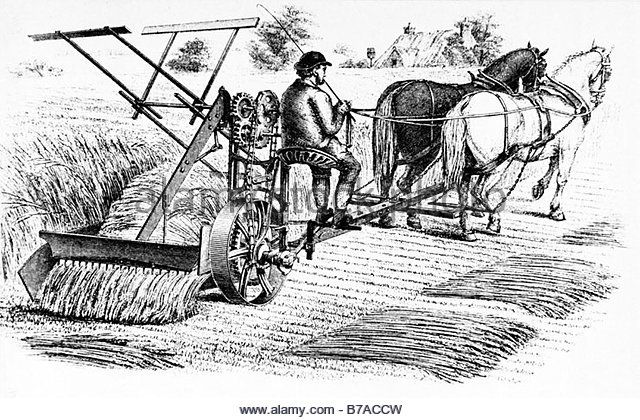
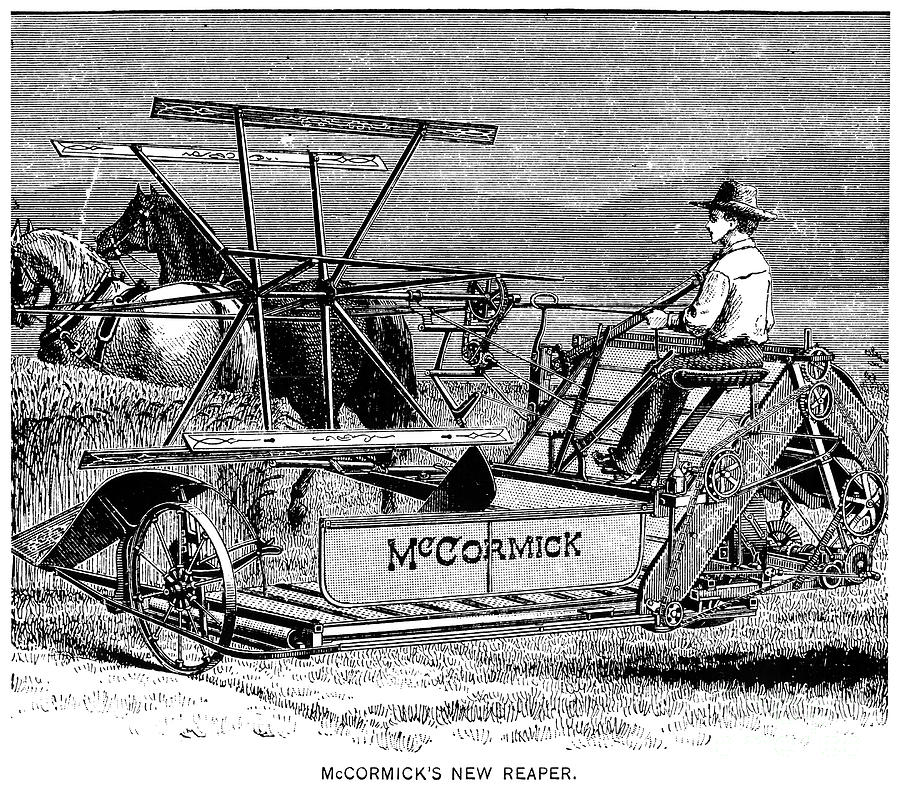
Cyrus McCormick was born in Virginia in 1809. Cyrus’s father, Robert spent years trying to develop a mechanical reaper. Cyrus took inspiration from a British version. McCormick had a calling, his reaper was patented in 1834. McCormick’s reaper was pulled by horses. A “Corraige” that had a moving knife to cut the wheat. They tossed off to the side. The reaper reduced limits on farming output, this increased profit potential. McCormick’s reaper was slow to speak at first. Patent wars hindered its adoption too. He lopt the patent war, and decided to innovate. He implemented innovative marketing campaigns. Offered money-back guarantees to midwest farmers.         

History 5 Lesson 25

Microphone

Charles Wheatstome was born in England in 1802. He invested in Valta’s book, he built his own battery for experimentation. He learned that sound is caused by vibrating pressure waves. He invented the microphone in 1827. The microphone converts sound  into electricity. It’s the same thing with the speakers in reverse. There’s a diaphragm attached to the coil. Magnet induces current in an oscillating wire coil. Electric signals amplified by other circuits. Wheatstone’s efforts led to modern microphone. Began working on electric telegraph in 1835. This led to the telephone in the 1870s. Thomas Edison invented the “carbon microphone” in 1977. 

Typewriter

William Austin Burt was born in Massachusetts in 1792. He became fascinated with sailing. He was devoted to his studies to suinces to help people. Burt invented astronomical instruments. He invented the typewriter in 1829. Typewriters imprinted neat writing into paper. Later models reduced jamming. People can type faster than they can write. Typewriters produced neat documents on demand. Burt’s typewriter wasn’t successful in his life to come up with a workable solution. The hansen writing ball was invented in 1865 Sholes and Glidden released the modern design in 1874. He had some drawbacks, writers began using them. 

Braille Reading System

Louis Braille was born in France in 1809. HE played in his father’s leather shop and he damaged his eye, the infection spread to his other eye. He became a very good student. He attended school for the blind. Braille wanted to help blind people become literate. He learned of the Barvier’s system and he devised his own in 1824. Braille allows blind people to read at standard speeds.  Brallie’s system improved reading speed over Barber’s. There are six raised dots in different patterns. Blind people can read proficiently and can access deep pools of knowledge. Founder of a school for blind invented his own reading system. Braille began publishing books on his new system in the 1830s. Resistance to Braille’s method because of loyalty to the old one. Braille’s students began spreading Braille’s system after his death.

Sewing Machine

Bartholemy Thimonsier was born in France in 1829. He opened a factory to produce military uniforms for the military. His factory survived for almost 200 years.Sewing machines stitch fabric together mechanically. The lock stitch is its “Secret”. It forms a very strong connection. The sewing machine makes it easy and fast to make it quality. Thimonmter’s machine spread throughout France, American Walter Hunt invented one in 1832. John fisher made a more useful model in 1846. Isaac Singer became successful in the business of selling sewing matches in 1856.             


History 5 Lesson 20

Portland Cement

Joseph Aspdin was born in England in 1778, he began experimenting with cement formulas. He patented his “portland cement” in 1929. Portland cement is most commonly used in the world. Cement binds the different ingredients together, concrete is strong under compression and versatile. They are good for foundation and walls. It can be reinforced for strength. William Aspdin’s cement formula was different from his father’s. It became immediately popular in London, others began figuring out Joseph’s formula. It was counter intuitive at the time. Most concrete used Portland cement in the US by the 1930s. Ferromagnetic materials produce strong magnetic fields. Electromagnets are artificial magnets, iron is easily magnetized, They were simple to make. Electromagnets can create strong or weak magnetic fields with the touch of a button. The electromagnetic connection captivated people. Stungean promoted magnetism in scientific journals. Joseph Henry improved Sturgeon’s magnet in 1830.

Passenger Rail

George Stephenson was born in Britain in 1781. He experienced a family tragedy. He became an expert in steam engines. Stephenson built his first locomotive in 1814. The first passenger car ran in 1814, passenger cars were pulled by locomotives. They come in a variety of types. Passenger trains serve different needs, they carry people quickly over long distances. Stephenson continued developing the industry. He built a major railway in 1830. Stephenson consulted with American entrepreneurs.

Matches

John Walker was born in 1781. Walker couldn’t handle the good of surgery. Walker became a pharmacist, he understood the weakness of chemical matches. Insight: combination of accident and experience. Matches start fires quickly, the match head contains chemical igniters. Safety matches are most common, the chemicals in the head combine with phosphorus on the strifing pad. Matches produce fire “on demand”. Walker sold match boxes for shilling. He named the “congreves”. Already well off, Walker didn’t patent the matches. Others improved the match after Walker. John Pusey invented the matchbook in 1896. Companies advertised their products on.